Dear friends of EPES,
As we feared at the time of our last Update, José Antonio Kast did in fact win November’s runoff presidential election in Chile, with just over 58% of valid votes. He took office on March 11, with an explicit commitment to overturn the previous center-left government’s reforms in pensions, gender equity, health, and environmental protection.
Kast’s campaign emphasized security and authority, criticizing traditional politics, rejecting cultural progressivism (His anti-immigration policies and demonization of migrants are particularly worrisome.), and defending the neoliberal economic model. His government is focused on reducing state spending on social programs, gender equity, and human rights—he proposes to reduce health spending by 2.2%, closing 24 primary health care programs or drastically slashing their funding. A plan to reduce spending in all government portfolios by 3% has had to be adjusted in some sectors because of organized opposition (even among parts of the Right itself).
His approval rating has fallen to 42%, with 53% disapproval, attributed by some to the impact of budget cuts, controversy around economic “mega-reform,” rising fuel costs, tensions around social rights and gender policies, and political polarization among his own supporters after he took office. Mobilizations around iconic dates such as International Women’s Day and May Day, along with organizing activity in the health sector and a reactivated student movement, have also had an effect.
The cuts don’t come into effect until 2027, so the full impact Kast’s program is yet to be felt. In the meantime, EPES continues to build capacity and plan how best to adapt to changing conditions.
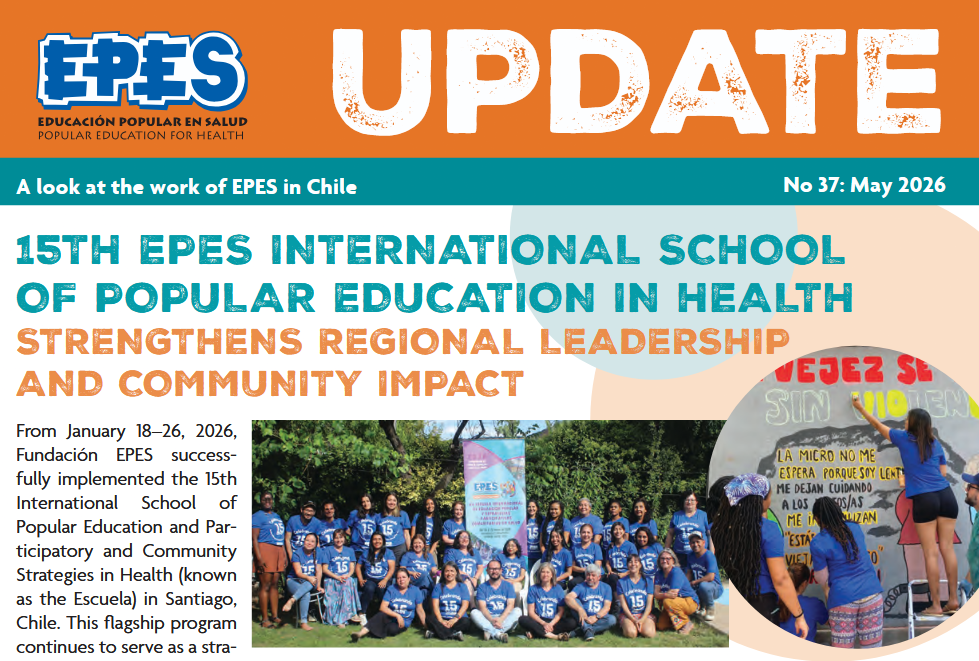
It’s hard to believe that EPES’ International School of Popular Education in Health (the Escuela) held its 15th iteration this year—I remember the first one as if it were yesterday! In this Update, you’ll read about the 15th Escuela and an important new component: a regional forum on water justice, highlighting the impact of extractive industries on community health.
The Update also recounts EPES’ part in the 10th anniversary celebration of the ELCA AMMPARO (Accompanying Migrant Minors with Protection, Advocacy, Representation and Opportunities) Network. During the gathering, Executive Director Sonia Covarrubias and educator Angelina Jara led a participatory evaluation process and facilitated a session focused on identifying ongoing challenges and future priorities—and learned that five of the participants were Escuela graduates!
Other items in the Update include reports on a visit to EPES’ former center in Concepción, a Spanish as a second language course for Haitian women, and a course on healthier and more sustainable ways of eating.
Of course, it’s your support that enables EPES to continue to do the essential work of strengthening individual and community capacity. At a time when funding for key programs related to EPES’ work is in peril, we are especially and profoundly grateful that you continue to support and accompany EPES in the quest for health and dignity.
In solidarity and peace,
Christina Mills MD FRCPC
AHA President
PS In addition to the Update below, make sure to scroll further to read a special message to AHA supporters from Sonia Covarrubias, EPES’ Executive Director.

